
“If you don’t know where you’re going, any road will get you there”
attributed to Lewis Carroll.
“Business strategy refers to a set of actions and decisions that an organisation takes in-order to achieve its long-term goals and objectives. It should be based on a comprehensive analysis of both internal and external factors that may impact the success of the organisation, such as industry trends, customer needs, competition, and available resources. By formulating a sound business strategy, an organisation can make informed decisions on resource allocation and guide their operations towards success, ensuring that they remain viable and relevant.” Source: ChatGPT
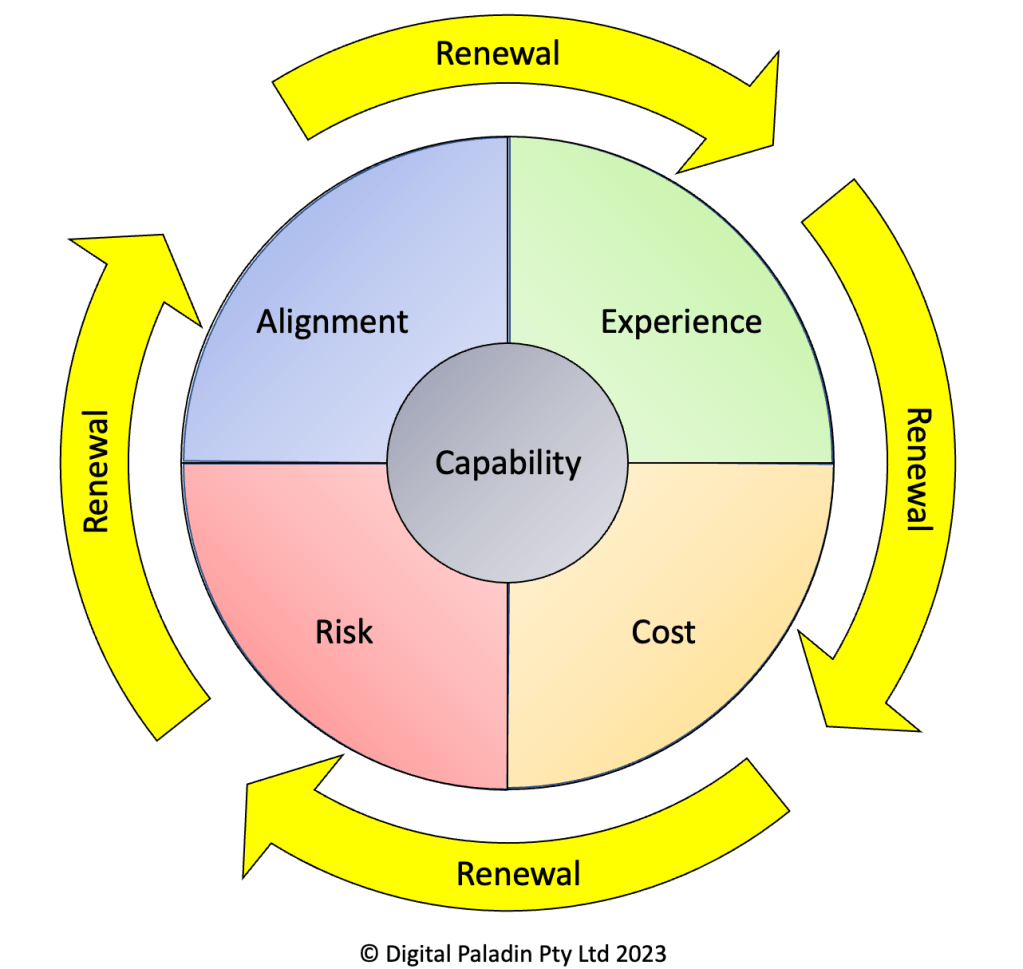
The starting point in the Digital Paladin Maturity Framework is aligning digital and ICT priorities and capabilities with the organisation’s strategy. This requires an organisation to have a clearly defined business strategy. As the definition above implies and this HBR video explains, developing a business strategy is about more than simply creating a strategic plan. This is encapsulated in Simon Sinek’s popular TED talk: “Start with Why” – the “What” (the plan) follows on from the “Why” and the “How”.
Some excellent resources on how to think about developing business strategy are:
- “Competitive Strategy” and “Competitive Advantage” by Michael Porter
- “Simplify” by Richard Koch and Greg Lockwood
- “Beyond the Core” by Chris Zook
- “Turning the Flywheel” by Jim Collins
While these references typically focus on commercial organisation, many of the concepts can be also be effectively applied to not-for-profit and government organisations.
 Digital Paladin
One response to “Digital Maturity Framework – Alignment Part 1”
[…] on from our recent post on digital maturity and strategy alignment, we turn to Risk which is another key aspect of the Digital Paladin Maturity […]
LikeLike